
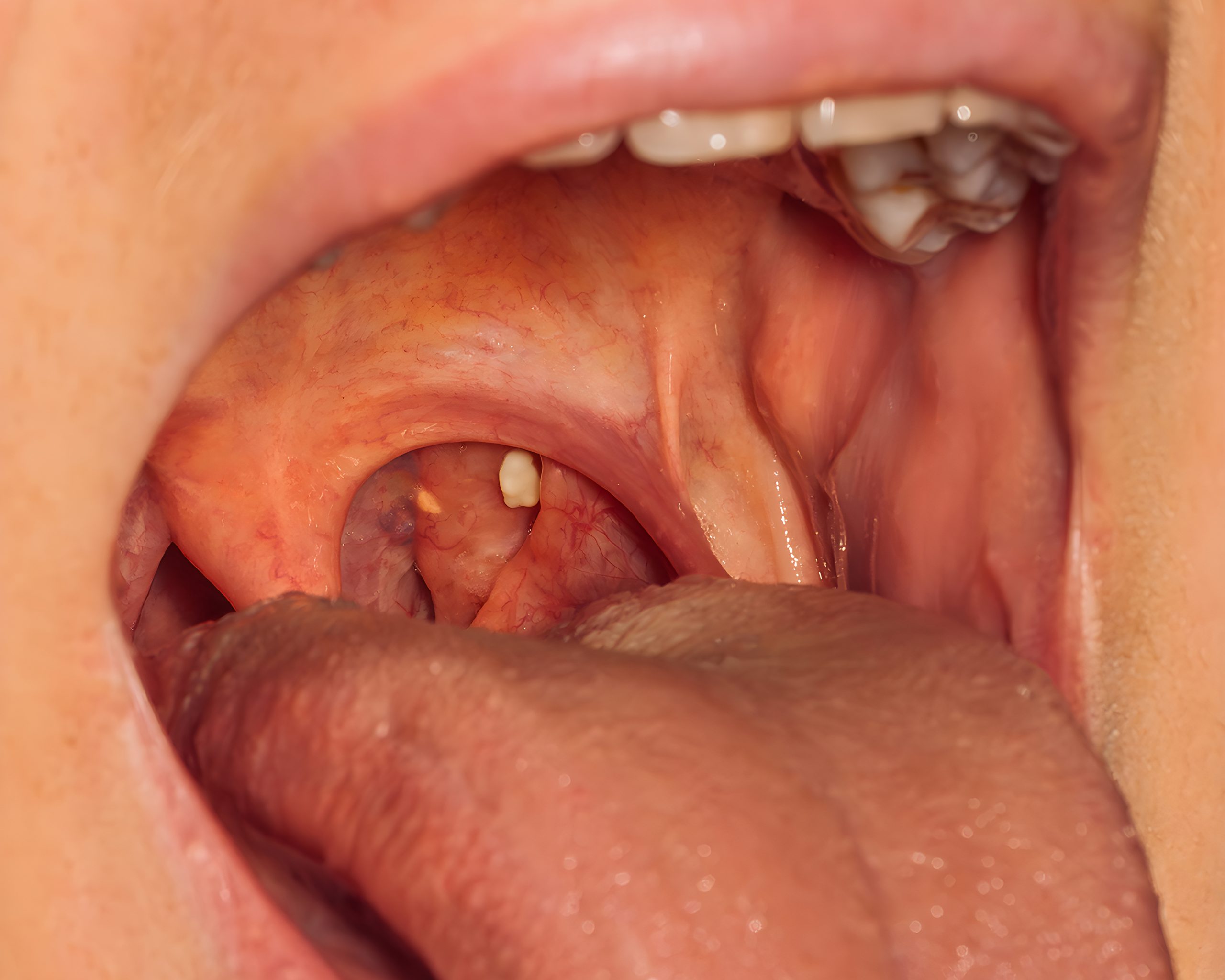
You brush, floss and use mouthwash, but the bad breath comes back within hours. Then one day you cough up a small, white, foul-smelling lump, or spot one wedged in the back of your throat in the mirror. That is a tonsil stone, and once you know what you are looking for, it explains a lot.
Tonsil stones are usually harmless, but they can be persistent and genuinely embarrassing. This guide covers what they are, how to remove them without injuring your tonsils, and the point at which an ENT can offer something more lasting than another round of gargling.
Quick answer: Tonsil stones are small, hardened deposits of minerals, food particles and bacteria that collect in the crevices of the tonsils. Most can be managed at home with warm salt water gargles, a low-pressure water flosser or coughing them loose. Avoid poking them with sharp objects. See an ENT if stones keep returning, cause pain or trouble swallowing, or come with one enlarged tonsil. An ENT can remove stubborn stones in the office, and tonsillectomy is the permanent solution for severe, recurring cases.
What Are Tonsil Stones?
Your tonsils are not smooth. Their surface is full of small pockets called crypts. Cleveland Clinic explains that tonsil stones form when material collects in these crevices and hardens, combining minerals, food particles and bacteria or fungi. The medical term is tonsilloliths.
Because the crypts vary in size and depth from person to person, some people get one in a lifetime while others deal with them every few weeks.
Symptoms of Tonsil Stones
According to Cleveland Clinic, the most common symptom is bad breath. Others include:
- An unpleasant taste in the mouth
- A sore or irritated throat
- A feeling that something is stuck in your throat
- Coughing
- Ear discomfort
- Trouble swallowing
- White or yellow specks visible on the tonsils
How to Remove Tonsil Stones Safely at Home
Cleveland Clinic lists several at-home approaches. Used gently, they work for many small stones:
- Gargle with warm salt water to loosen stones and soothe the throat.
- Cough firmly, which sometimes dislodges stones on its own.
- Use a water flosser on its lowest setting, aimed at the tonsil from the side rather than straight into the crypt.
- Press gently with a damp cotton swab next to the stone, not directly on it, to ease it out.
What not to do
Tonsil tissue is delicate and bleeds easily. Avoid:
- Toothpicks, bobby pins, tweezers or fingernails. Sharp objects can scratch the tonsil, cause bleeding and invite infection.
- High-pressure water flossing directly into the crypts.
- Digging repeatedly at a stone that will not move. If gentle methods fail after a few tries, it is time for professional removal.
Why Tonsil Stones Keep Coming Back
Removing a stone does not remove the crypt it formed in. As long as the pockets are there, material can collect again. Good oral hygiene, staying hydrated in Arizona's dry climate and regular salt water gargles can slow new stones down, but for some people they only reduce how often stones return.
When to See an ENT for Tonsil Stones
Schedule an evaluation if:
- Stones keep returning despite good hygiene
- You have throat pain, ear pain or trouble swallowing
- Bad breath is affecting your work or relationships
- One tonsil is noticeably larger than the other
- You have bleeding, frequent tonsil infections, or unexplained weight loss
Some of these symptoms, particularly one-sided tonsil enlargement, can have causes other than tonsil stones and should be examined rather than self-treated. If swallowing itself feels difficult, our voice and swallowing disorders evaluation may also be relevant.
How an ENT Treats Tonsil Stones
At Elite ENT, Dr. Luis Vazquez, DO starts with an exam of the tonsils and throat to confirm the stones are the cause of your symptoms. From there, options depend on how often stones return and how much they affect you.
| Option | What it involves | Best for |
|---|---|---|
| In-office removal | The ENT removes visible stones with proper instruments and lighting | Stubborn stones you cannot safely reach |
| Ongoing home care | Gargling, gentle water flossing, hydration | Occasional, small stones |
| Tonsillectomy | Surgical removal of the tonsils | Frequent, symptomatic stones or stones combined with recurrent infections |
Cleveland Clinic notes that providers may recommend tonsillectomy depending on your symptoms, and that surgery is the most permanent solution because it removes the crypts where stones form. You may also see procedures called cryptolysis mentioned online, which aim to smooth or reduce the crypts. Ask your ENT which options fit your situation.
Tonsillectomy is a real surgery with real recovery time, so it is usually reserved for people whose stones or infections are frequent and disruptive. Learn more about tonsil and adenoid care at Elite ENT. For parents, the tonsil infection thresholds used for children are covered in when a child should see an ENT.
Frequently Asked Questions
Who removes tonsil stones?
An ENT (ear, nose and throat specialist) is the right doctor for tonsil stones that you cannot remove safely at home or that keep coming back. An ENT can remove stones in the office and discuss longer-term options such as tonsillectomy.
Are tonsil stones dangerous?
Tonsil stones themselves are usually harmless. The concern is when symptoms such as pain, trouble swallowing or one enlarged tonsil suggest something else may be going on. Those symptoms should be examined.
Will tonsil stones go away on their own?
Small stones often dislodge on their own through coughing, eating or gargling. Because the tonsil crypts remain, new stones can form, which is why some people have them repeatedly.
Does a tonsillectomy stop tonsil stones?
Yes. Tonsil stones form in the crypts of the tonsils, so removing the tonsils removes the place they form. Because it is surgery with a recovery period, it is usually considered only when stones or infections are frequent and disruptive.
What are adenoid stones?
Most people searching for adenoid stones are actually seeing tonsil stones. The adenoids sit high in the back of the nose, where you cannot see them in a mirror. The white specks visible in the back of the throat are on the tonsils.
Get Rid of Tonsil Stones for Good
If tonsil stones keep coming back, an ENT visit can tell you whether in-office removal or tonsillectomy makes sense. Call (602) 802-8240 or request an appointment at our north Phoenix office. Se habla español.
Medical Sources
- Tonsil Stones: What to Know and How to Remove Them, Cleveland Clinic
- Tonsillectomy in Children: AAO-HNS Updates Guideline, American Family Physician
This article is for general education and is not a substitute for a medical evaluation. If you have severe pain, trouble breathing, high fever, or sudden hearing loss, seek care right away.